





Origins and Theory
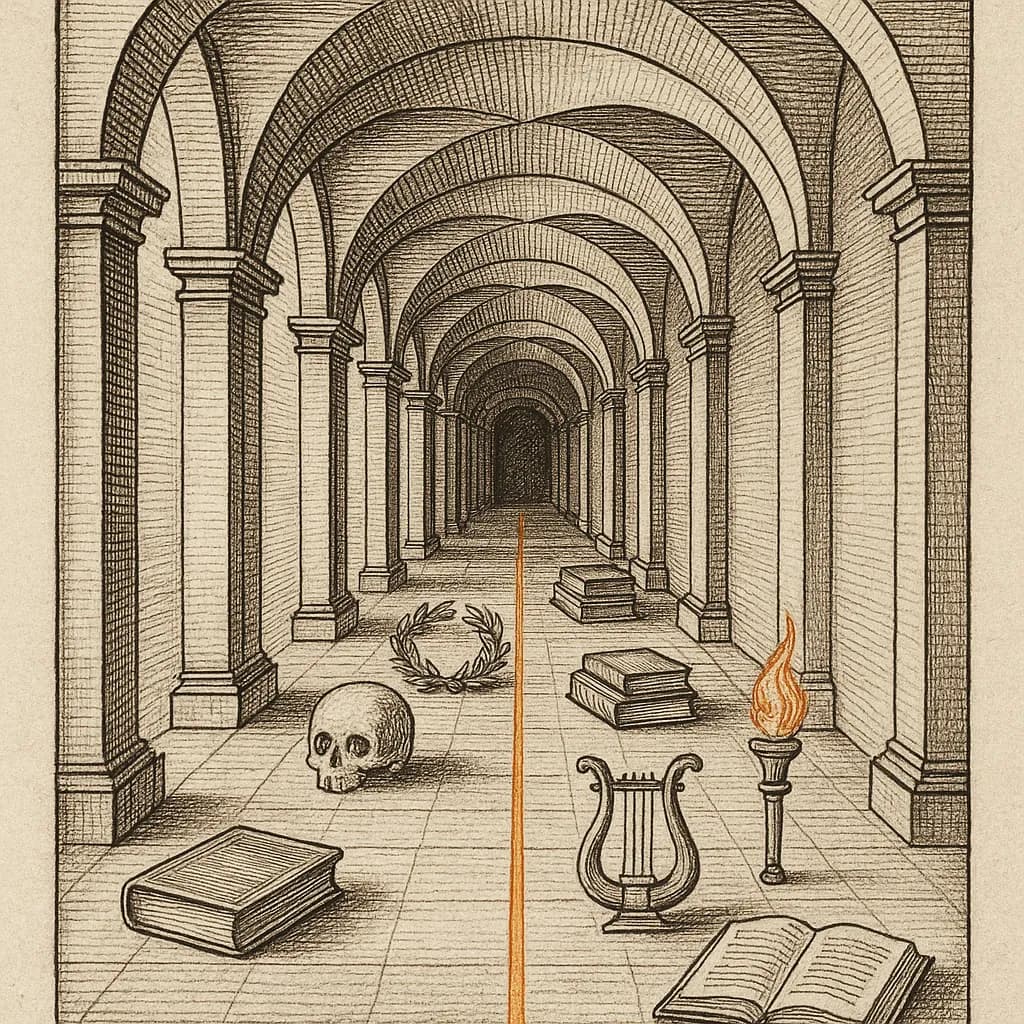
The Memory Palace, rooted in Ancient Greek rhetoric, exploits the method of loci: mapping abstract information onto spatial representations. Spatial memory leverages hippocampal place cells, providing a robust neural scaffold for long-term storage.
Construction Guidelines
- Select a well-known environment. Familiarity reduces cognitive overhead.
- Define a logical route. The path must be linear to avoid retrieval conflicts.
- Assign loci density. Beginners should limit to 10–15 loci to maintain image vividness.
- Create striking imagery. Incorporate motion, exaggeration, and emotion to engage multiple sensory cortices.
Encoding Workflow
Example: To memorize the phases of mitosis, imagine giant pro wrestlers (Prophase) entering your house, chromosomes lining up on a hallway meta (Metaphase) runner, etc. Each locus serves as a narrative waypoint, turning sterile terminology into unforgettable scenes.
Retrieval & Expansion
Mentally walk the palace along the pre-defined route, decoding each image back into its abstract counterpart. Advanced users can construct multiple palaces or nested rooms, enabling gigabyte-scale mental databases.
Practical Applications
• Public speaking — Embed speech sections along a palace path to present without notes. • Languages — Place gendered nouns in rooms themed by grammatical gender cues. • Competitive memory — Athletes routinely memorize shuffled decks in under 20 seconds using multi-deck palaces.
Limitations & Maintenance
Images fade with disuse; schedule spaced walk-throughs to refresh connections. Overlapping palaces may cause interference; keep thematic boundaries clear.
Final Remarks
By converting linguistic or numerical data into immersive sensory scenes anchored in space, the Memory Palace transforms learning from rote repetition into creative storytelling, unlocking prodigious feats of recall accessible to any dedicated learner.